Reviews of the Ephemeral

Archive for the ‘Object’ Category

Saboteur Awards 2013

In All of the Above, anthology, Interactive Literature, Magazine, Novella, Object, online chapbook, online magazine, Pamphlets, Performance Poetry, Play of Voices, Saboteur Awards on March 1, 2013 at 9:35 am

Your Pick of this Year’s Best Indie Lit!

Nominations are now closed, you can view the shortlist and vote for the winners here. Buy your tickets here.

Once a year, to mark our birthday, we at Sabotage like to give out some awards to the publications we’ve most enjoyed during the year.

In the past this was restricted to magazines, and it was held solely online.

This year, however, we’ve decided to do things a little differently.

First we’ve BLOWN UP [geddit?] the categories to include spoken word shows, anthologies, pamphlets, innovative publishers, your favourite literary one-off, … And secondly, we want you to vote for the winners!

This is going to happen in two parts:

  1. First you’ve got to nominate your favourites, which is where the contact form below comes in handy. Nominations close on 31st March at midnight (UK time).
  2. The very next day, we’ll be posting a shortlist here made up of the top 5 nominees and we’ll open up a round of voting. Voting will close on 1st May at midnight (UK time).

Then, this is the fun part, we are going to have a PARTY on 29th May at the Book Club, London, where we’ll announce the winners. It’s going to be a big celebration of indie lit in all its glory and we’d love it if you could attend. There’ll also be performances, a mini-book fair, music from LiTTLe MACHINe and our very own critique booth. Ticket details will be here soon.

The small print: the works you vote for have to have been created between 30th April 2012 and now. If you’re voting for a publisher or a spoken word event then they have to have produced something during that time frame, ditto for the one-off literary project.

We’ll be showcasing the shortlisted works on Sabotage: if they haven’t been reviewed yet by us, we’ll make sure they are. Winners get to perform at our event, be interviewed for Sabotage (like these guys did), and feel warm and fuzzy inside.  If you’re looking for inspiration, why not plunge into our archives? Here are some reviews of anthologies, magazines, novellas, pamphlets, spoken word nights and poets, objects, … We strongly encourage you to vote for more than one category.

If anything’s unclear, read our FAQ and do ask!

zimZalla object 014: ‘A never ending poem’ by Stephen Emmerson

In Object, Performance Poetry, Uncategorized on October 10, 2012 at 9:51 am

“This isn’t poetry – it’s mean!”;

 or, 

a cut-throat adventure in interactive poetics

-Reviewed by Anthony Adler-

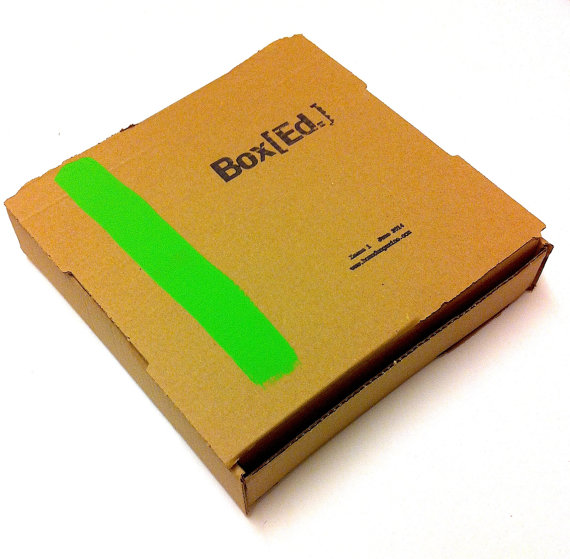
I knew that something strange was going on when one of my companions left the room, opened the front door, and screamed as loudly as she could before sitting back down. It’s not the kind of thing that I associate with reading poetry – but then A never ending poem read with dice that goes on to explore the possibilities of human intervention within the context & illusion of chance, ‘a fully playable board game which generates multiple aleatory readings of poem text fragments’, is probably quite far from most people’s idea of a poem. In physical terms, it comprises a screen-printed playing surface slightly smaller than a sheet of A4 paper, three translucent plastic playing counters, a small laser-printed booklet, two sets of blank cards to which printed texts and symbols have been carefully glued, two dice (with six and twelve faces respectively), and a box folded out of corrugated cardboard and labelled with playing instructions in which the game may be stored when not in use. The physical components of the game are workmanlike and unprepossessing, but by no means tacky. They are thoroughly ordinary objects, and together they make something altogether different from any other poem I’ve ever read.

A never ending poem comes with two sets of instructions, and I first attempted to play by myself, rolling the twelve-sided die to determine which page of the booklet of texts to read next in sequence. ‘The ACT of reading is also an ACT of construction’, declares point four of the instructions earnestly; ‘There is no resolution’, it states as the final rule for solo play: somehow it’s both sincere and tongue-in-cheek. Stephen Emmenson’s prose poetry oscillates between charming and gnomic, and the randomly ordered sequence is diverting enough in its own way, if eventually frustrating. After a little while I read through the booklet in order, considering briefly whether this fell within or stood in breach of the spirit of the rules, and concluded that the game had yielded all it would.

It was only when I roped in some sturdy companions that A never ending poem came into its own.  Players must travel around the board (on which playing spaces are arranged in an unbroken circle) and pick up poemcards or disaster cards when they arrive at the correct symbols: ‘the first player to collect 12 poemcards and recite the poem in the order collected is the winner’. The apparently innocent rules of the multi-player game, however, lend themselves to a viciously competitive style of play – and while patience initially appeared to be the virtue rewarded by the rules, we swiftly discovered that the disaster cards provided instructions so varied, unlikely, and subversive that they became the greater prize.  We thwarted and baited one another, marvelling at the emotive sting of competition (“This isn’t poetry,” one of my companions exclaimed – “it’s mean!”) whilst wondering whether the victory conditions would be reached before we lost interest. Somehow two of us acquired twelve cards simultaneously (I harbour lingering suspicions of prestidigitation), and we raced through our performances in a breathless jumble of overlapping fragments and full stops.

I’m not entirely sure what impact, if any, A never ending poem has had on my understanding of the possibility of human intervention, nor on my attitudes towards composition and construction. Considered simply as poetry, or as a poetry object, or as a generator of texts, it’s a charming diversion and no more. This isn’t particularly meant as a critique: I suspect that the game’s playful exploration of the ways in which readers construct meaning (or, more precisely, the aleatory processes that it initiates to facilitate this exploration) necessarily render any attempt to read the generated texts for sense and meaning somewhat pointless. Emmenson’s fragments were eminently suited to the task to which they were put, although I did find myself contemplating the practicability of homemade booster-sets to vary the range of poetics available.

Perhaps more interesting were the transformations that the game wrought on its players. A set of simple rules temporarily transformed my family’s relationship with poetry and encouraged an entirely new form of engagement with text – one that was competitive and vigorous. I can’t help but remember the thicket of blogposts published after Casagrande’s Rain of Poems on the 28th of June this year, and Tom Moyser’s piece in particular. Both A never ending poem and the Chilean art collective’s surreal poetry bombing play on and manipulate the ways in which we find value in poetry, encouraging readers – if that’s the right word – to view the texts themselves as prizes instead of the meaning that they may communicate. While the Rain of Poems was in many ways a celebration of shared value, A never ending poem seems more reflective, encouraging us to re-examine how we view success within poetry and how reading and writing help us get our kicks – a project actively served by the basic nature of the game’s props. Emmerson’s texts become a pack of MacGuffins, objects of desire that induce motivation regardless of their content; by so doing they simultaneously efface themselves and bring players to consider poetry as a good that is comparable to any other in the peculiar behaviours the pursuit of it provokes.

I’m not an expert on game design, so I’m not sure how well qualified I am to criticise the mechanics of A never ending poem; and while the game may have been less frustrating had it been quicker to play, I’m not sure that that wasn’t the point. I feel more confident suggesting that it might have been improved by a greater variety of text fragments and more numerous disaster cards, which would certainly make A never ending poem more repeatable – although again I’m not particularly bothered by this failing. Stephen Emmerson’s game is powerful, bizarre, engaging, baffling, frustrating, entertaining, and, above all, fascinating. If you’re intrigued, I can only recommend that you try it for yourself.

‘I Wrote This For You’ by Iain Thomas & Jon Ellis

In Object, Uncategorized on March 22, 2012 at 1:52 pm

-Reviewed by Ian Chung-

The digital age has seen the emergence of sites like Frank Warren’s PostSecret (2005) and Iain Thomas’s I Wrote This For You (2007) that have acquired loyal online followings. PostSecret made the leap from digital to print within a year of the site’s founding, and the book series now consists of five volumes. By contrast, it has taken just over four years for I Wrote This For You to make the transition into print. Published by Central Avenue, the book version of I Wrote This For You features selected entries from the site, as well as several that are exclusive to the print volume.

I Wrote This For You

For those unfamiliar with I Wrote This For You, the site is a transcontinental collaboration between Jon Ellis and Iain Thomas (aka @pleasefindthis), with the former providing the images and the latter writing the captions, which are always addressed to a person only ever referred to as ‘You’. The two men communicate online but have never met in person, as Thomas lives in South Africa and, until recently, Ellis was based in Japan (he now lives in Hamburg, Germany). For further insight into the thinking that underpins the project, read the HESO Magazine interview with Ellis or listen to Thomas’s talk at TEDxJohannesburg in 2009:


In a blog entry written on the day of the book’s launch, Thomas explains that the four different sections of the book version of I Wrote This For You ‘collect the posts into four distinct phases that describe, hopefully, the human condition. Sun is about looking for love or the potential for love. Moon is about the act of being in love. Stars is the loss of that love. Rain is about rediscovering hope in life, at the end of that cycle.’ Out of this arrangement, I suppose an oblique sort of narrative does emerge along those lines, especially with the last three posts (‘The Day You Read This’, ‘The Arrivals Lounge’, ‘The Last Thing You Said’). On the whole though, each picture and its accompanying caption still exist primarily as self-contained instances of what Thomas calls ‘ambiguous micro-stories’ in his TEDxJohannesburg talk. He goes on to explain that ‘by leaving out things like gender, age, race, location, people apply the stories to themselves’.

Paradoxically, it is precisely this stripping away of detail that allows the posts to acquire a certain universalised/universalising resonance, as though they capture something intrinsic about the experience of being ‘you’. Some of the post titles alone are already brilliant, e.g. ‘The Circus Is Cheaper When It Rains’, ‘The Place Sentences Go To Die’, or my personal favourite, ‘The Shop That Lets You Rent Happiness’. At their shortest, the captions themselves read like haiku (‘The Things That Are Left’: The world made me cold. You made me water. // One day we’ll be clouds.) or epigrams (‘The Skeletons In The Sea’: Truth is the last thing I can take because it’s the last thing you took.), while the slightly longer ones work much like prose poems (‘The Simple Shattering Of Water’: ‘It’s because you and them were made of the same pieces. And afterwards, when you put yourself back together, some piece of them remained.)

Ultimately, Thomas suggests in his talk, ‘There’s no story I can tell you that is as powerful as the story you can tell yourself.’ This is where the true power of a project like I Wrote This For You lies. At the risk of courting the scorn of those who would prefer to remain fashionably cynical, I would like to suggest that I Wrote This For You is an inspirational book and project. Not in the trite sense of cheap and easy Hallmark-style sentimentality, but because working together, Thomas and Ellis seem to have distilled something of what it means to remain profoundly human in a digital society. It is difficult to summarise the effect of I Wrote This For You beyond that, so I would definitely recommend visiting the project site  for a taste of the duo’s work, treating the book version as one possible shaping of the project into an overarching narrative.

‘Living Room Stories’ by Andy Harrod

In anthology, Object, Short Stories on January 18, 2012 at 4:39 pm

-Reviewed by Rory O’Sullivan-

Living Rooms Stories is the literary sister of a set of instrumental tracks by Icelandic composer Olafur Arnalds (Living Room Songs), for which he recorded a piece a day for seven days in his Reykjavik apartment. Andy Harrod’s literary counterpart comprises of short stories, each influenced by one of Arnalds’ compositions, following a couple as they contend with their own and each other’s emotions.

Arnald’s music (consisting largely of piano arrangements that accompany delicate violin, viola and cello performances) is inspiring, and I feel it would be a struggle to not pen something of real quality off the back of it. But it’s having the idea to set it to ‘story’ in the first place that makes Harrod’s endeavours all the more fabulous.

Living Room Stories is thus a highly original project. And you sense this before reading a single word: each story is written on the back of square card and they are presented in a neat vinyl record sleeve that is a nod to the collection’s musical influence.

Living Room Stories, Andy Harrod, reviewed for Sabotage by Rory O'Sullivan

On the piece of card that introduces the collection, Harrod tells us that Arnald’s first song, Fyrsta, “flowed through me; I pictured a couple, I felt love’’. The corresponding story, ‘beginnings’, raises the curtain beautifully for what follows.

We are presented with a scene where a woman is standing below the glow of a street lamp at night. There is a strong feeling of unease. She looks towards the lights of the city further down the hill and, immediately, we are left wondering how she ended up here. Tantalising clues are offered, however:

Turning her focus onto the rain, she notices how it glitters in the light before softly
disturbing the puddle at her feet, reflecting her worn out shoes.
Memories of chalkboards, puzzles and a bearded face fill her.

Allowing a character to recall memories in this way is a rather Proustian device, and is something that features prominently in the stories. Memories are stirred up frequently, summoning emotions – nearly always negative ones – that give these stories their thrust. In ‘month eight’, past torment is roused by the sight of a soft toy cat: “its neck squashed and bare through a desire for safety; a desire for a love that won’t bind and abuse.”

Memory of the past and its role in the present is clearly important to Harrod. In ‘the third person’ music is the instrument of memory recall and provides a direct invitation to the reader to consider the role of the past and how it affects the characters: “she hears the sweep of bows across strings in her head, repeating, repeating. It plucks at her memories”. The story develops in order to follow her thoughts at this point and, by now, a picture of a very troubled soul is being painted.

‘light’ is perhaps the most optimistic of all the stories. Moving on through time, and after stories that chart the couple’s wedding (‘together’) and hosting a gathering with friends (‘home’), ‘light’ winds the clock on even more and we are introduced to their children. As the brother and sister play in the snow with their green balloon (a scene that is described superbly in the opening paragraph), we are told:

Their mother smiles at their playfulness and how simple life can be.

Nearby, the father crosses the finishing line in some sort of race:

His body strains with effort, but it doesn’t hide his smile or the enjoyment in his eyes.
He blows her a kiss as he crosses the line. Looking up he laughs at his children
sliding down the hill.

He never thought that these days would be his.

Beautiful. What’s more, its juxtaposition within a rather downcast narrative (in terms of the whole ensemble) makes this story all-the-more positive. There is, however, an ominous feel at this point. Like Arnalds’ corresponding song, Near Light, something is missing. Perhaps, deep down, the couple aren’t truly at one yet with their happiness and that closure remains a distant goal. The imperfect cadence at end of the song compounds this. Something isn’t right, and imperfection seems to supersede absolute positivity.

Over the course of the collection there are no names, no places. Yet somehow the stories feel so ‘real’. Attachment to objects is limited because of the absence of proper nouns, and this heightens the sense that the emotions explored in the stories are universal and not only confined to the characters who illustrate them. Related to this is Harrod’s extraordinary ability to attach a lyrical and poetic quality to his descriptions.

He likes to give us detail, to invite us into a scene, image or setting. This feels all the more deliberate when you consider that each story weighs in at a mere 15 lines on average, making references to detail all the more meaningful. What is the significance of the mulled wine glass, the ash from her cigarette, the child’s green balloon? Parochial detail is abundant and helps make the characters and their emotions as real as possible.

The order of Arnald’s original pieces has been cleverly re-aligned in order to create a saddening history of our couple. It is more than simply a like-for-like, ‘story for each song’, rehashing of the Icelander’s collection. Rather, it is an artistic interpretation, a beautiful tribute to a fellow artist’s work, and represents an innovative means of finding inspiration.

At its heart, Living Room Stories is a study of love and emotion, characterised by the torment, heartache and hope that consumes our couple.“The focus was on love, love as destructive when conditional … and love as healing when truly unconditional. I wanted to keep this theme uncluttered, for without love I fear we are nothing”, Harrod tells me.

What a collection this is. It would be no exaggeration to say that I have not taken pleasure out of a reading ‘experience’ quite like this before. I think that this was helped by reading each story aloud while listening to the corresponding piece from Arnalds’ collection. Harrod’s work should be regarded as a new form that calls on influences from literature, poetry and music. This project is a stunning marriage of the three, and I cannot wait to see what comes next.

‘Zimzalla Object 005′ by Derek Beaulieu

In Object, Pamphlets on December 9, 2011 at 10:08 am

-Reviewed by Suzannah Evans-

Derek Beaulieu has stated himself that ‘there is still no accepted critical vocabulary for concrete poetry‘, and I can agree with this; reviewing his work presents some challenges. He is the editor of the visual poetry section of UBUWEB and the author of five poetry collections, three volumes of fiction and 150 chapbooks / pamphlets. There is no doubt that this man  is a linchpin of contemporary radical visual and concrete poetry.

Having said that, I had not heard of him before I received ZimZalla 005 through the post, an unusual item consisting of a cotton bag containing a magnifying glass and a miniature booklet not much bigger than a postage stamp. The whole thing was delightfully novel for my first ever Sabotage review, and challenged any pre-conceptions I might have had about reviewing poetry in print.

In this collection Beaulieu constructs images which use letters, rather than whole words (as with some concrete poems). The letters are combined with line drawings and this results in tiny intricate graphics, many of which are reminiscent of visual images that already exist in our day-to-day lives; staircases, map contours, chains of molecules, pieces of machinery. There is a great breadth of style in the graphics. In some the letters are easily recognisable, some are abstract and too tiny to read. The visual styles range from dot-matrix to calligraphy.

The collection presents some problems of understanding, however. I say ‘understanding’ instead of ‘reading’ because an attempt to read this as words or letters, from top left to bottom right, would, I think, result in some disappointment and a lack of meaning.

Having looked at other examples of Beaulieu’s work with letters on his website , such as this beautiful piece,  swarms, I think that this collection loses something from its small size. It is condensed and delicate but at the same time it is not as visually appealing as something like swarms and I would be unlikely to go back to it repeatedly just for the pleasure of the images.

This collection sits somewhere between poetry and visual art, a depiction of familiar shapes weirdly altered. It forces the reader to look at letters not just for the sound given to them or the words that they form but for their visual properties. By positioning these letters inside half-familiar settings and arrangements Beaulieu asks the reader to examine language as a construction. This is enhanced by focusing on the smallest possible unit of language, the individual letter outside of the word, potentially somewhat meaningless on a first reading but becoming more significant in an investigation of shape and sound.

Follow

Get every new post delivered to your Inbox.

Join 2,206 other followers