Reviews of the Ephemeral

Posts Tagged ‘Dan Holloway’

Interview with Dan Holloway

In Conversation on May 1, 2013 at 11:30 am

-Interviewed by Claire Trévien-

Art by Eleanor Leone Bennett (http://eleanorleonnebennett.zenfolio.com/

Art by Eleanor Leone Bennett (http://eleanorleonnebennett.zenfolio.com/

Dan Holloway is the author of several novels and poetry collections, the ringmaster of New Libertines, a touring band of poets. He has set up a new publishing imprint 79 Rat Press to publish his conceptual work, including Evie and Guy a novel in numbers, and curate conceptual literature shows, such as NOTHING TO SAY. As if that weren’t enough, Dan is a prolific blogger, writing among other things about self-publishing, and regularly writes for The Guardian.

CT: You’ve just launched 79 rat press as part of the literary exhibition Nothing to Say, can you tell me a little bit more about what inspired both these things?

DH: 79 rat press has grown organically out of eight cuts gallery, which I have run since 2010, and under which umbrella I’ve published some wonderful books that have had remarkable critical success for such a tiny outfit, such as Penny Goring’s The Zoom Zoom and Cody James’ The Dead Beat. It also hosts The New Libertines and all sorts of other events.

I think I have become aware though that I can make most of a difference through very sharply focussed, very small events and editions. I also wanted to get back to my original intention with eight cuts gallery of something literary based on a model from the art world. As you probably know, I am obsessed with both Modernism and 20th century art, culminating in the Young British Art movement. Tracey Emin is the biggest influence on my own writing, and what I have felt for a long time is that to get people truly talking about what literature can do, we need more events like art’s Freeze and Sensation, and more figures like Jay Jopling and Nick Serota to push challenging literature into the public consciousness. I think the last time that really happened was in the 60s and 70s when Carmen Callil launched Virago and Lawrence Ferlinghetti brought the Beats to the world through City Lights. I’ve always thought of myself as some kind of very weak shadow of Ferlinghetti, the guy behind the scenes who writes himself but whose pleasure is bringing other people to the world.

79 rat press is a body through which to do that – my White Cube as it were – and NOTHING TO SAY  is my first installation.

I am also endlessly infuriated by the lack of ambition in contemporary literature. It is very rare you will meet a writer who admits to wanting to change the world, or even wanting to leave the literary canon a richer and more beautiful thing for future generations. As a self-publisher, I’m used to people at events getting standing ovations for saying they want to get rich, but bustling me into a corner before I embarrass them any further if I start talking about wanting to chip away at patriarchy or wanting to unshackle the voices of the oppressed or provide a loom on which people’s voices can weave themselves into a glorious tapestry or, in fact, pretty much anything that has to do with wanting to create great art (apparently that’s arrogant – or intellectual snobbery – or even worse “rather sweet and we love that we know someone like you but can we get on and talk the grown up talk of how to sell now please” – whereas wanting to sell a stackload of books is “being a savvy entrepreneur”).

So I wanted a place that was unashamedly uncommercial (the exception being that unlike a lot of poetry presses I am paying all contributors an upfront fee) and where the sole focus was on the art. That’s probably enough for now or I’ll have nothing to say (see what I did there?) for question 3.

Veronika von Volkova (http://www.vonvolkova.com)

Veronika von Volkova (http://www.vonvolkova.com)

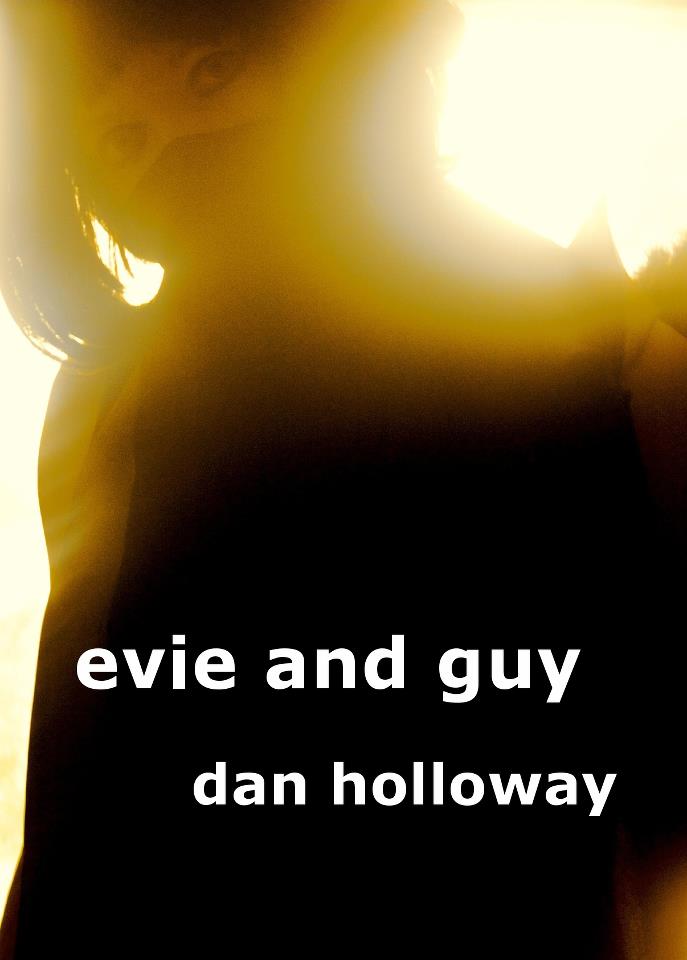
CT: You’ve written Evie and Guy, a novel written entirely in numbers. What prompted this idea and how did it end up in its final format?

DH: I just noticed I’ve already had 500 words and answering this in full would take twice that. Right, here goes at proving self-publishers can be concise. I’ve wanted to write a novel in numbers for about 3 years. It’s a bit like my Mount Everest – I wanted to do it because it was there. And despite a fair bit of hunting around, I don’t think anyone’s done it yet – which I have to say I find extraordinary.

The project started life as #twentyfoursevendigitalwonderland and was going to be a representation of a day in someone’s life through all the numbers they encountered. It was going to be about the digital world and how we construct our identity in it. But it wouldn’t work. I think the problem was that once I’d explained the idea, I’d kind of done it, so it’s more suitable for something once of my characters might do in a short story (I’m obsessed with writing about conceptual artists – largely because I’d like to have been one and have a whole wardrobe full of ideas for installations I haven’t the skill to make, so I write characters who make them instead – what readers will never pick up is that as I was writing the “longhand” for Evie and Guy, I actually created – in minute detail – seven separate conceptual art exhibitions that they staged between them). For all I am probably known best as the endlessly theoretical/political bar bore of independent literature who will never say “narrative arc” when he could cry false consciousness instead, I am actually a complete sentimentalist. My overriding artistic imperative is the freeing of each individual human spirit to enjoy its own sensuality and experience and express itself sensually in a world full of equally subjective, sensual spirits.

So, my novel would be in numbers, but it also had to be emotionally satisfying. It had to have characters and those characters had to have meaningful, fully-rounded experiences that would trigger readers to discover their own sensuality free from the confines of language. I came to realise more and more that I wanted to use number not language not just because I wanted to create a watercooler moment – in fact, not even to create one – but because actually there was more experiential truth for both character and reader in avoiding language. And those thoughts, combined with the academic work I’m doing at the moment, led me back to feminist interpretations of Lacan, and the fall from sensuality into language, and the desire to create something (what I rather grandiosely tend to call a “poetics of hope”) that would take some tentative steps towards enabling people to experience themselves not conceptually through a language that boxes them, putting them in this category or that category, every single one of them a fiction, but sensually, directly, by jarring them out of the myth that you “have to” or “can only” think of yourself linguistically.

Anyway, Lacan, with his notion of jouissance, the semi-orgasmic purely sensual experience of the self as self, was what gave me the lightbulb moment to make the book a list of two people’s experience of masturbation. And the more I explored the idea, the more it became obvious just how fruitful that could be as an indicator for life events and relationship events – in other words, I’d found a way to create the emotional core I wanted but to squirrel it away safely out of the clutches of language, waiting for each reader to unearth it anew as they read, and offering the possibility of reading as genuinely sensual and pre-linguistic, the first tiny step towards a poetics of hope.

CT: What do you hope people will go away thinking after attending Nothing to Say?

DH: The short and very simple answer is I want people to go away feeling what people felt after they’d been to Sensation. Or what I’d felt after I saw Tracey Emin’s and Steve McQueen’s installations at the 1999 Turner Prize exhibition. Both those exhibits slapped me in the face. Steve McQueen’s Deadpan was my first introduction in the flesh to the power of the Modernist project, and has influenced my own recent conceptual works like “All of These Taxonomies are Political”, a series of 512 almost identical limericks using just the words cock and cunt (what people forget about McQueen’s piece is its roots in comedy – a Buster Keaton sketch – and I loved that playfulness as well as the seriousness, and the way that the combination jarred me, kept pulling me up short, made me think about the structure – so using a limerick as the skeleton for a very serious linguistic exercise in repetition made perfect sense). Tracey Emin smacked me in the gut with a punch that’s left me bruised to this day. What I got from it was very simple – the most ordinary life has a transcendent quality, not because it is transformed into something greater than itself but precisely when it is not transformed – because life in all its messy minutiae IS what is transcendently important. Any art that seeks “the universal” or the general, or to make the everyday eternal is fundamentally deleterious to the human spirit. We give true voice to everything that is most important about each individual human life precisely when we burrow right down to the most insignificant and particular. It’s one reason I positively detest things like the Great American Novel.

I don’t know that I was aware of these aims as I sifted the submissions, but I was aware that certain pieces hit me viscerally, and those were the ones I clung onto.

The shortest answer of all, though would be this – I want people to go away with a heightened sense of their own sensuality. I want people’s lives after NOTHING TO SAY to contain more of their true selves than their lives before. And whilst the title may appear flippant (it was conceived as a response to poets like Geoffrey Hill who think the current generation of underground poets has nothing to say, and also references John Cage’s dictum “I have nothing to say and I am saying it”) but it’s become clearer and clearer that it is also very serious – a life lived experientially really should, in the deepest sense, have no words, just sensuality.

CT: You organize a poetry troupe called the New Libertines, and when I think of your poetry, the image of a flâneur pops up, possibly because of the organic and damaged nature of it. So I was wondering how big an influence symbolist writers, such as Rimbaud, are in your work? I’m thinking especially of poems like Baudelaire’s ‘The Swan’ and its uneasy relationship with urban renewal, in relation to your pamphlet i cannot bring myself to look at walls in case you have graffitied them with love poetry.

DH: Ha! I guess having said I want to be literature’s Jay Jopling I can’t really worm my way out of it when someone thinks about me as a flâneur.

I’m not sure how many of my influences (consciously) ever come from literature. I certainly feel an affinity for Symbolism, but I have always felt more of a conscious influence from art. I love Abstract Expressionism (my first real “artistic moment” was sitting in the Tate in the middle of a room full of Rothko canvases as an eight year old), which I would call a first cousin of Symbolism – though I think I have too much Lacan in my blood to ditch the Abstract Expressionists’ insistence on true expression coming non-verbally, o language as something we have to get around. I guess I’d say Symbolism says that when it comes to language we have to look out of the corner of our peripheral vision, whereas Abstract Expression says that to see we have to close our eyes (there might be a tiny crossover in Expressionist silent film in the 1920s, with directors like F W Murnau). I see Abstract Expressionism as a recent avatar of a form of Neoplatonism that has cropped up through history in the form of the ecstatic mystics and the via negative. There’s a long history that sees language as a hindrance rather than a help to understanding.

CT: We’ve talked in the past of the challenges of being both a live literature producer and a writer, sometimes one leads to neglect of the other. As an outsider you seem to have managed the balancing act: you have two major creative projects recently out (your novel and your show some of these things are beautiful), while also publishing other people’s works and curating events in Festivals nationwide. What’s your secret?

DH: I remember seeing an interview with Alexander McCall Smith in which he was asked exactly that, and his answer was very simple – keep walking the tightrope never look down. I find that a superb philosophy for life (it’s no coincidence that in researching recent works I’ve read a lot about parkour, and Philippe Petit the infamous high wire walker who walked between the Twin Towers). In fact it pretty much exactly sums up everything I’ve been saying about not conceptualising but experiencing yourself. Doing it, of course, is another matter – which is why I’ve also had two major breakdowns since getting into the literature game.

CT: You’re militant about the self-publishing cause, and have rejected publishing deals in the past, why is it so important to you?

DH: In part it’s a result of my own quirky mental state. I get claustrophobic sweats at the thought of a publisher telling me what to write. I had an inkling of it a year or so back when I self-published a thriller that did reasonably well, and all of a sudden people only wanted to talk about me as a thriller writer and I was trying to explain that I wanted to talk about conceptual poetry, slams, lyrical literary novels, post-communist identity politics, pretty much something different every day.

I’ve also sat the other side of the fence, and felt my authors’ pain – but also felt my own at their response to it. That’s one reason I don’t want to be a traditional publisher again but a curator of one-offs – handling the emotional rollercoaster an author goes on over the long term was too emotionally damaging for me – I can’t do it again, and I know I’d do the same to a publisher.

I also believe in self-publishing as a way to bring genuine innovation to readers, and I am deeply disillusioned with a lot of contemporary self-publishing, which is about how authors can make money. Which is fine, and I love popular fiction as much as I love the avant garde, but that’s not really widening readers’ access to life-transforming experiences. So I sort of see it as my duty to be the thorn in the side of self-publishing, reminding people of the amazing things it can do that the mainstream can’t, not for authors but for readers, and in turn I hope that will do a small part to help genuinely innovative writers to keep self-publishing. I have a feeling it makes me deeply unpopular, because it must seem like I’m always sniping form the sidelines. Fortunately in this regard I’ve got a very thick skin because I think it really is important. Readers have to come first, more than even that people and the effect culture can have on their lives has to come first and I hope I will never tire of calling people out when they bleat on about how we should publicise self-publishing as being “as good as” traditional publishing or some other form of stuffing the genuinely revolutionary back into its box. Fortunately also I started self-publishing early, and have been gobby enough for long enough that whilst I’m fully aware a lot of writers’ groups see me as a token artsy guy and are as acutely embarrassed by my presence during “serious” debate as they are rather exhilarated by having someone who does whacky things (though when it comes to it they will still always say “an important self-published book? Hmm, you should try this one, it’s just like 573 books published by Harper Collins you know”), they can’t quite push me out altogether because my tentacles are slightly too long. It makes me feel like the character you always get in an Agatha Christie novel, the black sheep child, usually a woman who does something shady like works in theatre, and drives a sports car and wears trousers who is simultaneously the family’s dark secret and the one everyone looks forward to turning up at the party because they know she’ll say what they always wanted to. That’s a role I can live with very happily.

CT: Finally, what’s next?

Well, to paraphrase Lord Flasheart, what isn’t next? Obviously the NOTHING TO SAY launch is looming (that’s at Stoke Newington Literary Festival on June 8th, followed by a week long exhibition at the Albion Beatnik Bookstore in Oxford that will include an updated mystery play stationed around Oxford, and I will be papering the walls with pages from Evie and Guy), though I have a poetry slam final even before that for which I need two new poems. Then The New Libertines 2013-14 tour is already taking shape.

For me, creatively, the next thing is a novel that interweaves all the characters whose stories I’ve been working on separately for the past 5 years. Ninety Nine Nights of Urban Dogging has all kinds of characters whose lives do (or don’t) overlap over the course of a summer around the death of a philanthropist who made his name delivering aid in the midst of the worst atrocities during the Kosovo crisis. There’s a policewoman who fled Kosovo as a child and has a second life as a dominatrix by night, a street poet who can sense when someone is about to die and tries to capture their last thoughts in poetry, an ageing feminist activist and novelist descending into dementia convinced that the plot of one of her earliest crime novels is actually real, and a group or private school students home for the holidays who discover their parents were part of a paedophile ring.

Review: Penning Perfumes – Oxford 21/02/13

In Pamphlets, Performance Poetry on March 12, 2013 at 9:00 am

- reviewed by Paul Fitchett -

SONY DSC

I had heard Good Things and exciting rumours about Penning Perfumes – the poetry and perfume mash up organised by Sabotage’s own Claire Trévien and perfume aficionado Odette Toilette – so it’s fair to say that I was looking forward to the event. 

And, with one “cheesy” exception (more of which later), I was not disappointed.

The Oxford leg of Penning Perfumes was in the Albion Beatnik bookshop, a suitably literary venue for an event that was to make poets and writers of all the attendees, because almost from the start it became clear that this wasn’t just an ordinary spoken word event.  No, in fact the event turned out to be akin to a workshop, as perfume samples were passed around the audience and people were encouraged to describe the smells.

Odette gives us the background

Odette was on hosting duties first and set out the background to the night – samples of perfume had been sent out to various poets to create works based on that scent.  She explained that the poets had been given a pretty much free range on how to develop their poems, and that came through in the different forms that the poems on the night took.

The format for the night was first half, poems based on perfumes, second half, scents based on poetry and then a haiku competition to win a bottle of perfume.  Interactivity and feedback were also to be key with question and answer sessions with the poets after their performances.

First Half – Poetry from Perfume

Claire introduced the poets in the first half with some humorous introductions and good patter.

  • The first poet of the night was James Webster, with a poem called “Flatpack Lover” based on the perfume Reverie au Jardin by Andy Tauer. It was a tale of creating a wooden man with the “still pulsing root of a sandal wood tree” and eventually a sentient army that led itself to emancipation.  He made full use of the depths of the perfume, mint and wood and flowers, resulting in a poem with a good mix of humour, politics and philosophy and excellent delivery. James’ poem was also the only one of the evening (by someone present) not to use the perfume as a leaping off point for reminiscence and so as the night went on his piece became all the more unique.
  • Next up was Valerie Laws. Her perfume was Smell of Weather Turning and is by Gorilla perfumes, who  supply Lush. The scents in the perfume to her suggested the colours green, white and violet (which were the colours of the suffragette movement) and memories of her childhood and grandmother. This inspired her poem: “Scent for a Suffragette”.
  • It had a structure to it that accented synesthesia throughout with repeated accent on the three colours and was a good example of the nature of this evening with smells translated to word.

After the first two poets with their “classic” pieces, we had the three new poems created especially for the Oxford event and it was revealed that they had all been secretly sent the same perfume (Hasu no Hana by Grosssmith).

  • First up, Lucy Ayrton with an untitled piece about memories of childhood, her mother and feelings of ‘having to be a grown up’.  A very sweet poem, well delivered and with lovely phrasing “slicked lipstick” and her mother’s make up not being “war paint” but rather “watercolour”.
  • Next, Dan Holloway who added another stimulus to the night by passing around photos of a street in Gdansk lit by cabinets full of amber.  I particularly liked Dan’s performance here:  rhythmic and subdued, he excellently reflected the themes of the piece – time, our connection to the past and repetition.  I would like to read through this piece as it sounded like it had a lot of depth to it.
  • The final poet in this half was Eloise Stonborough who had also been inspired to think of her mother by this perfume….but in a very different light to Lucy’s piece.  Eloise’s “All things nice” was an exploration of gender and how we know ourselves (in a more formal poetic style than the previous poets). There were parts of the poem that were almost post-apocalyptic in their imagery and this sense of loss was maximised in the final line which shall stick in my mind for a while – how the inside of her mouth is “still as pink as the girl my mother mourns”.

Odette then asked the three poets what they thought of each others pieces, and  I thought this was a bit awkward for the poets as they didn’t really seem very comfortable trying to read into each others’ pieces.  However, they all seemed more comfortable when talking about their own pieces and it was good to get an insight into their thought processes, the development of the poems and how they’d used the perfume.

  • The final fragrance of the first half was one created by perfumer Kate Williams in collaboration with Lindsey Holland, and her poem based on the scent was well read by Claire Trévien.  It was with some trepidation that I took a sniff of this perfume after Odette said that it wasn’t for sale….for a reason!  Actually, it wasn’t that bad, I thought it was sweet and sherbety.  Lindsay’s poem “Plantation” was a verbal recreation of a fairground on the frozen river where “wine and cider make petals on the ice”.  As it turns out, the perfume was apparently created to smell like the indolence of pre-raphaelite women surrounded by sweets but never happy.

Second Half – Perfume from Poetry

  • After the break we were told we’d get some very unusual fragrances and the first one certainly split opinions – I thought it was quite pleasant, with a smell something like new shoes or an unused sponge but others visibly recoiled from it.  The perfume was created based on a poem by John Clegg, called “Mermaids”.  I enjoyed this poem and the way it explored the crossover between taste and smell with mermaids “singing to each other in pheremones”.
  • Valerie was called to the stage again to introduce a perfume based on her “Remembering Love”, which had some lovely images of summer rain and the earth drinking its full, but I was distracted by smelling the scent and trying to figure it out – at times on this night there was a bit of sensory overload. 
  • The perfume: imagine vicks rub mixed with rosemary.  Valerie told us that the scent was designed to invoke memories of love, but it mainly invoked memories of having a blocked nose for me, but I suppose perfumery isn’t an exact science. 
  • The penultimate fragrance, created in response to a poem by Claire Trévien by Shropshire based perfumer called Chris Bartlett.  Claire admitted to trying to manipulate the outcome by giving him a poem that mentioned her favourite smell -leather.   The poem itself, “Listening to Charles Ives” was a self-described breakup poem, which I thought was great.  With a nod to pathetic fallacy, the poem talked of a crowd gathering and storming and delicately dealt with a relationship that was going nowhere that had ‘the promise of a tomorrow’.
  • And now it was the time we’d all been waiting for – John the Perfumer was to create some kind of scent live tonight based on a poem by Lucy Ayrton, which he’d been sent in advance.
  • But first, the aforementioned “cheesy moment”.  John split us in two groups, gave us both the same scent (but with a different description) and instructed us to rate how pleasant it smelt. It was like someone had eaten a whole parmesan and vomited it back up.  Bleuch.  Sadly, this smell lingered throughout the rest of the night and I had to forage for discarded scent sticks from earlier in the night to rescue my poor nose.
  • He then passed round a much more pleasant scent and there was much discussion among the audience about what it was – nutella or caramel.  It turned out to be prunes.
  • After this perfuming interlude we were back to the poetry with Lucy Ayrton performing “Bonfire Juice” – a lovely rendering of a happy summer that has been discussed before on Sabotage.
  • John Stephens, the Perfumer, discussed his choice of scent based on the smell and I must admit being slightly disappointed. We had been told that John would create something live onstage for the poem, but he just chose an extract that he felt matched it.  Admittedly, the choice mate (used as a tea itself in South America) was excellent – the woodiness really evoked the images in Lucy’s poem and he also passed around a “phonolic odour” that really did smell like the lapsang souchong mentioned in Bonfire Juice.  I combined the two smells to make something I thought was very pleasant!

The Haiku Challenge

The audience was given one last perfume to smell and then 2 minutes to devise a haiku based on it.  Some of the haiku were excellent and came from such different places and with great stories.  While I couldn’t quite hear them all, I did hear the winning poem as…. it was by me!  Which was a nice surprise and definitely not a bribe.

Overall, it was a very interesting event, very different from your average poetry night.  I really did enjoy the interaction between the audience, poets and hosts.

‘Dark Corners of the Land’ by Adelle Stripe

In Pamphlets on December 4, 2012 at 9:21 am

-Reviewed by Dan Holloway-

 adelle

Dark Corners of the Land, Adelle Stripe’s third pamphlet issued under Geraint Hughes’ unctuously gorgeous Blackheath Books imprint, is one of those books I placed in front of me and, after cooing over the endpapers and production values, I opened and closed and opened and closed nervously. Stripe’s ‘Sacred Heart’, a beautiful, bustling, heartbreaking elegy to Paris from her previous pamphlet Cigarettes in Bed, is one of my very favourite poems. And having favourites is dangerous. You wait for that moment of disappointment, the confirmation that your idols have faded.

Fortunately, when I did emerge from Dark Corners of the Land, there was good news and bad news. The good news is that, in ‘Bad Blood’, the collection contains one of the best poems I have read in years. The bad news is that, as a reviewer, it is nice to be able to balance the positive and the negative of a book. And there really isn’t a negative here. Not even in the ordering of the collection, which is something I’m usually ridiculously fussy about.

Formally, Dark Corners of the Land shares the diversity of Adelle Stripe’s other work. There is everything from a ‘Dead Leaf Haiku’ to the gloriously sprawling ‘Bad Blood’. But this stylistic range hangs together perfectly within the context of the collection, offering zooms and washes within its single canvas.

At first, that canvas seems to be that of the rural idyll. But whilst there is sentiment, even a glorious sentimentality, about the land from which she chisels her poems, there is nothing idealised. We start with a tiny detail, a rabbit savaged by myxomatosis and dogs, served up to the narrator of ‘Reward’: “still warm, / the blood / spilling out / on my hands.” This is the perfect programmatic opening (I said this was a beautifully constructed set of poems). Dark Corners is a collection in which the land opens its diseased and damaged heart as a last gasp offering to the poet, and Stripe takes that responsibility on board and gives the land a voice.

Little about the land Stripe describes is unspoilt. This is georgic, the poetry of farming and its ambivalent relation to “nature”. “We stood in the dreek/ farmyard” begins ‘Sweet Meat’, about the castration of a calf. ‘First Milk’ tells a story that is both heartrending and everyday about a still born lamb. The message is clear – those who work the land are drawn to it, rooted in it, dependent on it emotionally and physically, but can do little but skim its surface. In the end they bring as much destruction in their own way (myxomatosis) as the encroaching urbanites who bring “oil, drip-dropped from the motorway planes”

Everyone in Dark Corners is drawn to the darkness, helpless to resist, and like grotesque inversions of Midas they each bring their own destruction that, in reality, does little but hasten nature’s own cannibalisation of itself. This should make for incredibly bleak reading, and indeed it does. But like the glorious supernova of a planet’s sun, or a Peter Greenaway film, there is a hypnotic beauty in this decay. The key poem in understanding this deep ambivalence is ‘In Utero’, which opens with:

“Women ask ‘will you have children?’

What follows is the truth behind the glib response that “my poems are my children.” It is a horrific account of a calf’s stillbirth witnessed by a fourteen year-old.

“We wrenched the bulldog calf
out of the bellowing beast”

the story concludes,

“slopping its glutinous body
into the wheelbarrow
ready to be sold
for dog meat.”

It is an event that clearly encapsulates nature as a whole, and infuses Stripe’s piercing reply to those who ask the initial question:

“I do not tell them the truth, for fear
of spoiling polite conversation
or their own infatuation with maternity.”

Nature is a sun in the last exquisite phase of its dying. Those who understand only the first of these things, its beauty, fail to see the truth about nature – that we are in its end times, that the seemingly ceaseless cycle of the generations is over, that the only rational response is to let the present moment soak into us.

If ‘In Utero’ is key to understanding Stripe’s approach to nature, then central to understanding the collection’s whole world view is ‘Bad Blood’. With its litany of phrases beginning with “who”, the poem sets itself up in the mould of Howl, announcing its own importance. Only instead of “the greatest minds of our generation” we have plastic bags:

“Over the water, plastic bags hang,
mottled old rags in the cold March wind
[…]
each plastic bag a broken genealogy
[…]
faces from way back burned in the bark”

Humanity, bringer of ugliness and destruction, is something viewed “over the water,” something other, leaving its ugly scent marks on the land in an attempt to claim them with its vandalism, an attempt that is ultimately futile and serves only to damage itself.

“Each branch of my own family tree
is strangled with plastic”

the poem concludes. Humanity and nature are not separated by the water after all. They are one, and the cycle of violence they perpetuate against each other is a death hold of self-harm. This is both Thelma and Louise and Butch and Sundance, facing death with an exquisite romanticism, and Leaving Las Vegas, the last pathetic breaths of a co-dependency that cannot escape the cycle of destruction.

In conclusion, this is a pamphlet that offers wonderful insights, single, beautifully-painted brushstrokes. But it is also woven from many layers into a remarkable, beautiful, heartbreaking, destructive, magnetic tapestry, which serves as a perfect metaphor for the unravelable relationship between humanity and nature.

Top Website for Self-Publishers Award

In Uncategorized, Website on December 1, 2012 at 7:07 pm

-We interrupt the usual broadcast with Claire Trévien-

We were delighted to find out today that Sabotage Reviews was nominated by members of The Alliance for Independent Authors for their Top Website for Self-Publishers Award. Here is the shiny badge they gave us for it:

topwebsite

Also nominated and worth a look were:

  1. World Literary Café http://www.worldliterarycafe.com/
  2. Lindsay www.lindsayburoker.com
  3. Louisa Locke http://mlouisalocke.co
  4. Rachel Abbott http://www.rachel-abbott.com/
  5. David Gaughran http://davidgaughran.wordpress.com/
  6. http://www.bragmedallion.com/
  7. www.janefriedman.com
  8. www.IndiePENdents.org
  9. Joanna The Creative Penn http://www.thecreativepenn.com/

It’s also been wonderful to be name-checked in the Guardian recently by Dan Holloway, who recommends us (along with the fab  htmlgiant and 3:am) as a good place to find out about exciting self-published work (as well as ‘chapbooks, zines and true one-offs’: our favourite things! Send us more of those to review please!)

In this spirit, I have plunged into our archives and come up with eight recommendations of works that can be categorized as ‘self-published’, each interesting in its own right, but please, make use of the comment box to expand this.

I found this task harder than I expected, partly as we have not systematically tagged works as ‘self-published’, partly because Sabotage is so invested in indie enterprises that it is hard to know where to draw the line. I have mostly limited it to works produced and written by the same author. I probably pushed the boundaries by also including an edited work in the selection but it is such a one-off published by Claire Askew’s one-woman micropress that it seemed churlish not to. Some of these reviews have aged better than others, and it was sorely tempting to edit out sentences patting self-publishing on the back for being almost as good their ‘professionally’ printed counterparts. What I have come to appreciate in the two and a half years of Sabotage’s existence is that yes, while self-publishing can equate work of dubious quality, it can also be a veritable treasure trove of unique and exciting ventures, and I hope that we bring more of the latter to light in years to come.

Let’s all remember that fabulous China Miéville quotation:

‘We piss and moan about the terrible quality of self-published books, as if slews of god-awful crap weren’t professionally expensively published every year’

-Living Room Stories by Andy Harrod. Extract from Rory O’Sullivan’s review: ‘What a collection this is. It would be no exaggeration to say that I have not taken pleasure out of a reading ‘experience’ quite like this before. I think that this was helped by reading each story aloud while listening to the corresponding piece from Arnalds’ collection. Harrod’s work should be regarded as a new form that calls on influences from literature, poetry and music. This project is a stunning marriage of the three, and I cannot wait to see what comes next.’

-Muses Walk by Christodoulos Makris. Extract from Rishi Dastidar’s review: ‘the notion of the street as a muse is artfully explored through these sixteen poems, and Makris strikes an excellent balance between a sharp, urban sensibility, an unhurried languor and an elegiac air which reminds us that, even on our streets, there are always stories to be found, to be recreated and to be inspired by.’

-Starry Rhymes: 85 years of Allen Ginsberg  edited by Claire Askew and Stephen Welsh. Extract from Chris Emslie’s review: ‘Starry Rhymes is a loving testament to the work of an undeniably important poet. This shows in the care with which the chapbook has been conceived and collated. Its most powerful moments do not, however, rest in the flattery of imitation. [...] Undaunted by the not-small task of responding to a giant of modern American poetry, this assembly of thirty-three voices reflects (or possibly refracts) Ginsberg at his most feverish, human and heartbreaking. It is Michael Conley who best summarises how the poet himself might reply to a birthday gift like this: “I am grateful / you have kept me alive. / I am. Listen to me.”’

-Everything Speaks in its Own Way by Kate Tempest. Extract from Dan Holloway’s review: ‘Both sound and sight stand on their own (on which note I have to mention the layout of the words – presented on the page as paragraphs more than poems, which works incredibly well, not forcing us to guess or impose rhyme and metre but to let the words flow through us), but this does what beautiful artisan books should do – it is both a full introduction to an author’s work and a collector’s item, perfect for fans and newcomers alike, and a fitting way of bringing a genuinely landmark book to the world.’

-Anatomically Incorrect Sketches of Marine Animals by Sarah Dawson. Extract from Ian Chung’s review: ‘Far from being terrible, Dawson’s poems are lyrical observations, shot through with imagery that is tactile and visceral.’

-Reasons not to live there by Humphrey Astley. Extract from Afric McGlinchey’s review: ‘Today’s world is complex, and in his pamphlet, Astley has captured the confusion faced by the youth in Britain, where identity is no longer established simply by an accent. Here is a thinking poet, with a natural talent, whose work shows considerable promise.’

-lapping water by Dan Flore iii. Extract from Ian Chung’s review: ‘Ultimately, the most compelling feature of lapping water is its intimacy. The danger for the lyric ‘I’ to lapse into solipsism is averted in Flore’s collection because his poems frequently reach out to draw a ‘you’ into their imaginative space.’

-Markets like Wide Open Mouths by Tori Truslow. Extract from Claire Trévien’s review: ‘Truslow’s Bangkok comes across in this work as a culturally rich, touristy, buzzing, cosmopolitan, ghost-infested and endlessly fascinating city. In her hands, even a bus journey becomes extraordinary.’

Review: Wantage Poetry Slam – Wantage Betjeman Poetry Festival 28/10/12

In Festival, Performance Poetry on November 6, 2012 at 9:00 am

- reviewed by James Webster and special guest reviewer Lucy Ayrton -

@ Shush

The Event

Last Sunday, I attended the Wantage Slam was part of the wider Wantage (not just) Betjeman Poetry Festival, which featured a slew of interesting readings, performances and workshops (often Betjeman themed due to his long association with Wantage).

The Slam billed itself as ‘a fast and furious, X Factor- style, spoken word stand-off ‘ and for the most part lived up to that description admirably. Featuring 12 different poets, with a variety of different lyrical styles, we were served up some excellent rapid-fire rhyme and thoughtful storytelling as the poets battled it out for first place.

The Slam Style

Splitting the 12 performers into four heats of three (brackets selected randomly from a hat), with the winners going on to the final round, poets were judged on three categories: quality of writing, quality of performance, and audience reaction. It was my first experience of the ‘bracketed’ slam system, and I had to say I enjoyed it, and while scoring by three distinct categories is not always the most popular of judging styles, it does ensure poets are encouraged to give rounded performances.

Where it fell down is that, while billed as ‘X Factor-style’, it actually wasn’t enough like X-Factor … which is a statement I should probably qualify as soon as possible. Allow me to rephrase: where the show fell down, for me, was that while judging on the three different categories is not such a problem, the lack of transparency in scoring is. I found myself really wanting to know the breakdown in scores if only so I knew which judge to cheer/boo when I agreed/disagreed with a score. Plus, it’d be nice for the poets to know where their performance has potential room for improvement.

The Poets

Heat 1: Lucy Ayrton, James Dolton and Graham Eccles

Lucy Ayrton: a Sabotage favourite (we gave her Edinburgh show 5 stars twice), Lucy performed ‘Little China Figures’, a brittle and adorable piece, buoyed by waves of smooth rhyme, the poem told a powerfully realised and bittersweet story. But it suffered slightly from an unusually stilted performance. 17

James Dolton: his poem ‘Reading Too Fast’ was cleverly self-referential to his writing and delivery, with excellent use of performance and slick cadences. It did tend to repeat itself, which may have been the point, but made it somewhat dull towards the end. 24

Graham Eccles: also performed a piece on writing poetry, which had some pretty good gags (especially a cat setting his poem on fire) and amusingly clunky rhyme, but didn’t come to a head nearly soon enough. 20

Heat 2 (points not announced): Kieran King, Nick Short and Brenda Read Brown

Kieran King: performed two pieces, the first ‘Whatever Happened to the Heroes’ had quick-fire delivery and a relatable subject (all the heroes have sold out, let us down or died), but seemed simplistic and perhaps undercut itself (saying ‘I can think for myself’ while bemoaning the dearth of heroes to look up to). His poem on sticking out at metal gigs was a strong, rat-a-tat, one-note joke on metal being in your heart, not your clothes. 2nd

Nick Short: announcing his poem as ‘for anyone who works in an office’, he had decent timing, but it was ultimately comic grumpiness with little real insight and a hint of sexism (deriding colleagues for being excited about their children with a ‘congratulations, you spread your legs’ comment). 3rd

Brenda Read Brown: was ridiculously likeable. Her poem on creating a new ‘old-age’ political party was full of wit and wordplay (‘kids drunk on WKD-40’ and the idea of a ‘drive-by grumbling’) and just about transgressed into being genuinely political. The litany of fears and loss that it built to was also pretty powerful. 1st

Heat 3: Helen Harvey, Joel Denno and Tina Sederholm

Helen Harvey: the third poet to deliver a meta-writing poem, her personification of poetry was reasonably original, with some vivid imagery (‘I carved quills from my fingernails’) in her search for a muse. But some of her delivery was disjointed and her performance fell a bit flat.

Joel Denno: taking the form of a homework assignment for school-children, this poem was disjointed, with various sections that didn’t form a coherent whole, leaving a kind of bifurcated and pointless poem (with bonus gothic gore that, while decent, didn’t lend any more of a point). 22

Tina Sederholm: performed her piece on cupcakes (from her show Evie and the Perfect Cupcake, rated 4 stars by Sabotage) in all its voyeuristic and frosted glory. Her repeated cries of ‘lick me’ build very amusingly, while her sugar-sweet language of hunger and hollow fulfilment pulled the audience in admirably. 22

Heat 4: James Webster, Dan Holloway and Guy Williams.

(Special Guest Reviewer Lucy Ayrton taking over here, so Webster doesn’t have to review himself)

James Webster: came to the stage after a truly ridiculous intro, and his piece ‘MCWASPSM’ had a good tempo and rhythm and his flawed take on socialism was a great section. The piece had a coherent structure and clarity and the line ‘I don’t mean to complain, I don’t mean anything at all’ was a brilliant line that probably would have been a better ending than the unnecessary verses that followed. 22

(Thanks, Lucy, I’ll tag you out now)

Dan Holloway: Dan’s poem ‘Making Fairytales’ contained a plethora of verdant and gorgeous language (‘folded poems into paper planes’), full of magical and dirty imagery, with a thoughtful and assured delivery that was a breath of fresh air. 21

Guy Williams: of his two pieces the better was a dull poem on how he solved problems DIY style by chopping them in half. The worse was a creepy piece best summed up as ‘breasts are nice to look at, which isn’t really sexism is it? Oh, it is? Well don’t worry I’ve checked my sexism at the door after my daughter started growing boobs’. I’m sure it was intended as satire, which it kind of worked as, but it needed more thought and self-awareness to work.

Final: James Webster, James Dolton, Brenda Read Brown, Joel Denno and Tina Sederholm.

(I once again pass over to Lucy Ayrton for reviewing duties, Lucy?)

James Webster’s ‘What Are You Thinking’ had a strong voice, good opening and some amusing back and forth between its different voices. The shift into more resonant imagery was satisfying and Webster nimbly flitted between funny and touching lines, with a lovely lyrical voice. I’ve heard this poem before and it’s improved: very good.

(Thanks again, Lucy, your cheque’s in the post)

James Dolton’s poem was pleasantly abstract, seeming to use different strands/images to chart the course of a life/forming of a mind. The excellent use of on and off mic sections worked well to draw the audience in and delineate different ideas, mixing some cool word-association and plays with meaning together into an effective performance.

Brenda Read Brown cast herself as an appropriately fallible/human God in ‘In the Beginning’, a rollicking ride through Her attempts at creating life, going through some amusing missteps before finally creating evolution and leaving them to it. Funny, clever, and in the end a moving elegy to the excellence that is a God-like humanity.

Joel Denno continued his theme of ‘poems that seem entirely pointless’ with a piece about orchards going on strike. Not weird enough to work as surrealism, yet not biting enough to work as satire or allegory, I was left admiring some of his technique, but wondering ‘why’.

Tina Sederholm’s ‘Love Tokens’ is a heartfelt and humorous piece, with a consummate performance. Reimagining her husband’s messes as ‘love tokens, signs of your devotion’, she utilises a lovely refrain to subtly build a layered performance where her metaphor defeats her own frustrations. Simply excellent.

The Winners and Prizes

  1. Brenda Read Brown – £100 and slots at future festivals
  2. James Dolton – £70
  3. Tina Sederholm - £30
  4. Joel Denno – Wine
  5. James Webster – comedy tickets

Overall

A fun slam, which was well hosted by Anna Saunders with energy and good humour (poets who went overtime were threatened with nebulous punishments to be meted out in the back room). As with all slams there were some mixed performances, but the majority was entertaining, with special praise going to the top three of Tina, Dolton and Brenda who all wowed me.

Review: ‘Everything Speaks in its Own Way’ by Kate Tempest

In Pamphlets, Performance Poetry on July 7, 2012 at 9:46 pm

- reviewed by Dan Holloway -

One of the most beautiful things I own

Kate Tempest’s first full-length book, published through her own imprint Zingaro, is printed on thick, acid-free paper that nestles between unctuous card covers embossed with minimalist gold print and the imperial purple endpapers that each hide a surprise – pocketed inside are the accompanying CD and DVD. To focus too long on the beauty of this book, CD and DVD set would be an injustice (though it’s hard not to linger on the sheer satisfaction of the object as it sits in your hand). Everything Speaks in its Own Way is both a superb book and an important one.

From Stage to Page

The multimedia format from an artist best known for her coruscating live performances could be seen as a hedging of bets – if the words don’t work quite as well on the page you can turn the sound on to see how they’re “supposed to be.” But that’s not it. Both sound and sight stand on their own (on which note I have to mention the layout of the words – presented on the page as paragraphs more than poems, which works incredibly well, not forcing us to guess or impose rhyme and metre but to let the words flow through us), but this does what beautiful artisan books should do – it is both a full introduction to an author’s work and a collector’s item, perfect for fans and newcomers alike, and a fitting way of bringing a genuinely landmark book to the world.

Tempest: a storming performer

Kate Tempest is such a stunning live performer, her shows so inspirational, that the first book asks key questions, especially for those who believe that performance and page poetry are different things. I first saw her last December in a disused boot factory in Oxford that had no working door, one heater and a dripping roof. She was wrapped in five or six layers, hat, and hood, with her arms wrapped around herself but for half an hour as her passionate, imploring voice rang through the building we were transported somewhere magical. The big question is: how on earth it is possible to distil moments like that onto the page?

With a precious and important voice

It was no surprise to me that the answer is her words are just as precious on the page as they are on the stage. Tempest may be a hip hop MC as well as a poet but she weaves Blake and Shakespeare effortlessly with the patois of the street. ‘What We Came After’, for example, is both a meditation on the loneliness of Prospero and Caliban and a piece railing against elitism in literature/education. It builds itself around imagery from the Tempest, riffing on the line “you know that Hell is empty coz all the devils are here”, effortlessly and intelligently glossing on the play in achingly beautiful language and rhyming as delicately as filigree:

“So, call me Caliban” she says, adding “they gave me language so I could rain down my curses in verses” though back in the day “this island was mine for a home. I was free to rhyme as I roamed now my mind is alone as I writhe and I moan – I’m the captive of consonants” before bringing the significance right to the present:

“we’re needing a breeze through the stifling heat of elitist descriptions of what we can reach”

Why it’s important:

The whole collection moves this effortlessly through the whole cultural canon whilst never losing its biting contemporary edge, from the brutal ‘Cannibal Kids’ to the brilliant dissection of modern working life, ‘Bubble Muzzle’:

“life goes on in a bubble, it’s tunnel vision all week and the weekend’s for seeing double…we’re like a dog wagging its tail, expecting a treat coz it learnt how to put on its own muzzle”

The highlight is the final poem, ‘Renegade’, a call to arms that had the audience in whoops and tears when I heard it, sending us out into the night with a very simple message “I care about genius I don’t care about celebrity” but it’s a message Tempest weaves brilliantly as she leads us through a long, dark night of the cultural soul:

“I’m writing tonight, I got a jam jar of wine, I’m rolling smokes spitting bars to myself with a swollen throat…if you wanna talk, just come find me – I’ll be on Lewisham way watching the dawn melt away”

through her personal epiphany

“I learnt about patience, I learnt about stamina, and every little moment stacked up and it all added to the present”

to the new, angry and frustrated, eyes through which she saw the world

“it’s all so physical here, the alcoholic in the offie, filling up his trolley till the world disappears”

before returning to Shakespeare

“why must we starve while they banquet and feast? But Banquo will rise, he has a message for the guilty”

as she builds to her climax

“meet me at the bar we’ll raise a drink to the sky – and I will show you that you’re fucking incredible.

We’re not flesh, we’re all energy.”

You can buy it here.

Review: Hammer & Tongue Oxford Slam Final 12/06/2012

In Performance Poetry on July 2, 2012 at 3:32 pm

- reviewed by Neil Anderson -

Sabotage recently previewed the Hammer & Tongue Oxford final, and to follow up from that, Neil Anderson reviews the final itself!

Oxford’s Skylight Crisis cafe was packed to an extent I’d never before witnessed for the 2012 Oxford Hammer and Tongue final. This was the second Hammer and Tongue event I’ve attended, and perhaps oddly, the second time I’ve been handed a judge’s score book, on this occasion at least, according to host Tina Sederholm, because I’m “not swayed by the crowd.”

The Hosts – On the Road to Edinburgh

Tina Sederholm and co-host Lucy Ayrton moved things along briskly, keeping us entertained with their bickering. They opened proceedings with previews from their forthcoming shows. Tina invited us to ‘consider the cupcake’ (from her upcoming Edinburgh show ‘Eve and the Perfect Cupcake’), and her cries of ‘lick me!’ typify Tina’s naughty but nice approach to her craft. She really is my favourite flirtatious auntie and while she forgot the words to her piece a few times, she did so with a self-deprecating charm that took the pressure off of other performers.

Lucy’s ‘Let me be Lost’, from her forthcoming Edinburgh show ‘Lullabies to make your children cry’, was just mesmerising. Paul ‘Should have been a final contender’ Fitchett, explained it was about ‘not following the trail of breadcrumbs, but still wanting to know where it leads’ and I wish I could tell you more, but to be honest, I just sat there spellbound by one of Oxford’s most heart-breakingly gifted poets. So, just go and see her (and Tina) on 12th July at the Old Fire Station.

The Final! An epic battle of words, politics, rhyme and comedy:

Lucy and Tina retreated to the wings and the competition began. First on was Pete The Temp (whose one-man show Pete the Temp vs Climate Change was recently reviewed on Sabotage), who I once saw read a wonderfully theatrical piece about North Sea Oil called “YOU rely on ME!’”, after which, he insisted everyone raise their hands and stamp their feet in a cringe fest called ‘Angry Pedestrian’ whereupon I walked out. Guess which piece he performed tonight? He began with the ‘David Cameron’ rap, confirming his talent for mimicry, but repeated ‘Eton homey’ allusions (while garnering nuclear blasts of laughter from the audience) were as predictable as the right-on buttons being pushed. And when it came to his pedestrian rant, his rhythmical verbal quickness and talent for getting the audience involved won him points, but I just sat there exasperated.

Paul Askew meandered on next. The self-styled sex symbol of Oxford poetry offered the night’s riskiest moments with ‘Three Times a Lady”: ‘I remember, the first time I fell in love with you/ … you were getting that treatment thing/where the little fish eat the dead skin off your feet/Your face looked like you were having a dildo slowly/inserted into your vagina/and I thought, “I wish that dildo was my penis.”/ Paul’s sex symbol status hung in the balance, but his self-deprecatory style eventually won over the doubters with this deadpan and humorous tale. The follow up, ‘Catastrophe Cafe, took longer to get going, relying on absurdist dialogue exchanges for momentum, and only really half making its point by the end (personally I think this is one of the most beautiful, funny and poignant poems I’ve heard – Ed).

Next up was Aubrey Mvula. His first poem, ‘I am African’ slammed media reporting of the continent exclusively in terms of disaster. Effective parody, but lines like ‘the rivers of the mighty Nile flow deep within.’ and ‘my pride stands tall as the mighty baobab tree’, while it was a powerful message of reclamation, it risked offering an image as one-dimensional as the colonial attitudes being parodied. His second piece, about child sexual abuse was more earnest, but perhaps not that controversial (the 6.9 I gave him, though, seemed to be).

Moving from the worthy to the whimsical, we had the poetic maelstrom that is Anna McCrory. She delivered a thumping version of her high street shopping fable ‘The Wizard of Argos’, and an equally enthusiastic follow-up about the let-down factor inherent in feel-good movies. It was a slightly stop-start affair, with Anna pausing several times to retrieve her lines from the back of the stage and even leaping onto a chair at one point, but by the time she’d finally got hold of the plot, the laughs came slick and fast, and we were whooping along like characters in some corny Richard Curtis extravaganza.

After Anna’s flights of fancy, Davy Mac gave us a decidedly un-rose-tinted glimpse of reality. Ex merchant navy, big issue seller and as scouse as they come, Davy sets his stall out for society’s have-nots. His poetic schemes aren’t the greatest I’m sure he’d admit – knowing where the rhyme’s going to fall in each line puts a hell of lot of stress on the vocabulary to deliver. And mixing things up by throwing in a rap did little to alter the predictable format, even if it did get the crowd on his side. And his tale of homosexual encounters during his time in the forces was heartfelt and poignant. I enjoyed his set, but more in spite of the polemics than due to them.

About as far away from homeless ex-sailors as you might care to position yourself stood Mark Niel. I wondered for a moment what Mark was doing here. Consciously and unapologetically middle-class and giggling like a suburban scoutmaster entertaining the troop, I feared he was in for a judicial pasting. Nevertheless, by the time he’d nailed Iams cat food and poetry in ‘my cat’s an Iambic cat,’ and delivered a wonderfully valedictory tale of first love with ‘Sweet 16’, the camp was well and truly on fire.

Dan Holloway is a talented writer and his early forays into poetry held promise. But, in Sabotage’s opinion, his attempts in previous performances to adopt an overtly ‘slam-rap’ style caused his delivery to seem over-performed. Dan throttled back the performance in ‘Mentalist’, his assault against mental health service cutbacks, allowing the poetry room to breathe, before building the pace towards the end with a rising sense of panic. ‘Hungerford Bridge’ meanwhile offered another tour of the seedy city underbelly that Dan’s so fascinated by, but is perhaps less convincing in a slam format then some of his other pieces.

And finally, to Neil Spokes, Oxfordshire pub landlord and I have to say it, Vic Reeves lookalike. And his first piece sounded a bit like Shooting Stars meets Splodgenessabounds, Neil roaring “Pint of Fosters and Errrrrrrrrr…’ followed by a list of your average Brit lout’s Top 10 tipples. It was cathartic no doubt, but in need of some polishing. He continued the weekend party theme with the more sobering ‘Neretva’, set against the shelling of Mostar. It didn’t quite hit the mark as, unlike his opener, Neil seemed slightly too removed from events.

The Dramatic Conclusion

Finally, for those who care to know: the three highest scorers were Dan Holloway, Davy Mac and Pete the Temp. Pete and Davy were called back for a final head to head and Davy, by now on his last legs, eventually won through, perhaps because, while the audience clearly admired Pete, it was Davy who gained their affection and respect.

Review: Not the OxfordLiterary Festival – Friday 30th March Installment

In Novel, Performance Poetry, Short Stories on June 27, 2012 at 4:28 pm

- reviewed by James Webster -

Alternative Poetry and Publishing!

In this, its third year, the Not the Oxford Literary Festival ran from the 27th to the 30th of March; parallel with the mainstream Literary Festival. Organised by Dan Holloway, it’s an interesting indie alternative to the somewhat ubiquitous literary festival that tours many UK cities.

So arriving at the inestimable venue that is the Albion Beatnik a little early, I was distressed to find out that the Not the Oxford Literary Festival’s Wednesday event had not only featured a plethora of joyous poets, but had also seen the first ever occurrence (to my knowledge) of a fight at a poetry event (I can only assume someone called Wordsworth an annoying hippy and things descended from there). ‘How will tonight live up to that excitement?’ I asked myself. Incredibly well, it turns out.

As well as talks from a variety of small publishers about their various intriguing ventures, we also had performances from some very proficient political poets and the poetical experiment that was Gin-Soaked Sheets (brought to us by Lucy Ayrton): a selection of writing exercises the audience could take part in through the night, that coincided neatly with the breaks and thus the participants level of intoxication (you had to write down the number of drinks you’d had when you did each exercise, for science!). And some very good music performed by the very talented Jessie, too!

The variety of different talks and performances made sure the night never got stale (until the very end) and everything was ably presided over by Dan Holloway’s warm hosting. Indeed, Dan’s enthusiasm for the event and clear affection for all the people he’d brought together to the event was a definite factor in the audience’s collective enjoyment.

After a charming intro from Dan we had the introduction of the:

Gin Soaked Sheets task 1: write a poem that takes the form of a selection of information about a book that doesn’t exist.

We then had our first talk from:

  • Frank Burton (Philistine Books) gave an intriguing explanation of Philistine’s activities over the last two years, in which they’ve published 20 e-books and discussed the motivation behind making all their books available only online and all for free.
  • Philistine Writers who read:
  • Patrick Whittaker read from ‘Sybernika’ a clash of entertaining sci-fi and the all-too recognisable mindset of a reckless driver, with some expressively described music mixed in (the speaker tells his car’s AI ‘I’m not reducing speed in the middle of Mozart’s 40th!’).
  • Rick read several variations of the Lord’s Prayer, aimed at Toddlers (‘Halloween be thy name’), Middle England (‘give us this day our Daily Mail’), Gay Men (‘it’s raining, amen’) and Zen (‘your name is sky beyond sky’). They varied from appropriately and amusingly juvenile to really quite beautiful, succeeding in making the Lord’s Prayer more human and humorous.
  • Clare Fisher read the opening of her new novel ‘Avalon’, dissecting the question: ‘how do you know when your sister is missing?’ with quiet hope and despair hovering around the edges of her words.

Organiser Dan Holloway then gave us a preview of the political poetry with his movingly grimy and clever piece ‘Monsters on Our Streets’ that weaves together different ideas of monsters; the hoodies, drunks and drug-users, and then the men in suits who made the system that threw these supposed ‘monsters’ of our generation up and ‘let its body rot like meat … and pocketed their change’.

NOTE: Dan’s own collection ‘Last Man Out of Eden’ has just been released and will be reviewed soon on Sabotage!

Gin Soaked Sheets Task 2: Write down 20 quotes from the readers and then use 5 to make a poem.

Kirsty Clark railed against the advice writers are always given that say you have to follow certain rules, and also read two extracts from her book ‘Going Back’ (possibly the most commercial book of the night). It evoked a nice atmosphere of homeliness and comfort while its bare writing style (while maybe seeming to lack originality) highlighted the danger of loved ones overseas, and gave a sense of quiet trauma when they returned.

Orna Ross from the Alliance of Independent Authors talked about her own writing experience (64 rejections, then the 65th submission resulted in a 2-book deal), and how surprised she was by the cynicism of the book business (her editor once told her ‘every time you come here you leave feeling really shit’). She found that writers in the indie publishing system had a much better time of it and launched ALLi at the London Book Fair back in April with the belief that by combining resources publishers can do more than they could alone.

Banana the Poet and partner Andy spoke on their efforts with Endaxi Press in publishing books of poetry. They focus on professional and beautiful looking books, which they do in both print and electronic versions so readers can choose their format.

Authors Electric are a group of 28 authors, whose spokesperson Dennis spoke on the importance of Indie publishers building reputations and giving a defined image of who they are, so the indie publishing scene can continue to develop into a viable alternative to mainstream publishing.

He also read a 30-minute section from his book ‘Spirit of the Place’ which dragged on long after losing audience interest.

3rd Gin Soaked Sheets Task: listen to the following music, imagine you’re listening to it at a train station, look down at your hands: now write a thank you letter to them.

Musical Interlude

  • Jessie Grace gave a fun musical set of jangly, but discordant, guitar that was much fun (and occasionally wistfully melancholic). With the guitar strings bending and her voice crooning, you could feel the music thrumming through you. Very enjoyable (and apparently she’s Eight Cuts’ oldest collaborator).

Political Poetry

  • Danny Chivers kicked off the political poetry with a poem on the ‘armani army’ who are ‘out of control, feral’ in their corruption of the system. A fluidly angry poem, resonating strongly with the occupy movement, that encourages us to take back control as ‘we are the 99%, and if we take back our consent, they’re irrelevant’.
  • His second ‘Shopper-Scrounger’ is a slightly illegal poem that he performed during the occupation of Fortnum & Mason, which promptly got him arrested. It made use of his faux-reasonable smarm to great effect as Chivers directed his funny and flowing scorn at companies that evade taxes.
  • Davy Mac‘s powerful voice came across well in ‘Your Loot’, expressing the unfairness of politicians trying to make sleeping rough illegal.
  •  ‘Cutting Edge’ evoked a gradual chipping away of optimism and confidence, mirroring how constant persecution of the poor from the media and society grinds people down.
  • While ‘PTSD’ was chilling and torn glimpse of former soldiers on Remembrance Day being reminded of ‘what they drink all year to forget’, ending with the powerful ‘I’ll be dying for your freedom, in a war lost before you were born.’
  • Finally, Dot 23 performed ‘Evisceration of Democracy Village’, a brittle poem giving glimpses of late-night fractures of violence and chaos, as peaceful idealists are evicted from a camp in the confusion of the early morning.

Overall: a really entertaining and elucidating night, providing a plethora of alternatives to mainstream publishing and poets!

Preview: Hammer & Tongue Oxford 2012 Final

In End of year round-up, Performance Poetry on June 11, 2012 at 3:29 pm

-preview by James Webster-

This coming Tuesday the 12th of June sees the culmination of another year of Hammer & Tongue: Oxford with their Slam Final, pitting the winners of all 7 of this year’s heats against each other. Champion will slam against champion in an intriguing mix of established veterans and up-and-comers, youth and experience, with only one winner able to go on to the National Final (which if it is anything as exciting as this year’s finals at the Walton Music Hall, will be very special indeed).

As an added point of interest the winners will also be joined at this slam by the ‘Best of the Rest’, as the H&T team put all the runners up from this year into an online vote, allowing public opinion to decide which poet would take the ‘Wildcard’ spot in the final. After a close-run vote Neil Spokes emerged the victor!

With less than two days to go until the slam itself, Sabotage takes a look at each of the poets who will take to the stage to try and claim their spot in the national final.

October: Paul Askew

The self-styled ‘Official Sex Symbol of Oxford Poetry’, Paul booked the first place in the final by winning against stiff competition at the H&T February heat at Turl Street Kitchen (an event that included fellow finalist Anna Macrory as one of the feature poets and was headlined by Henry Bowers). Sabotage have reviewed Paul several times since, and if anything his comically surreal (and often surprising perceptive) poetry has improved. Askew’s more recent pieces like ‘Chaos Café’ and ‘The Extremely Abridged History of Paul Askew in 5 Dream Sequences’ have remained funny, while showing considerable depth and a talent for performance. Paul also edits the Ferment magazine.

Biggest Strength: his capability for blending humour and pathos, with an extremely original and absurdist voice.

Weakness?: his surrealism, while excellent, may not be for everyone, and he often reads his poems off the page, which usually hinders slam performance. But Askew is nothing if not a bucker of trends.

November: Pete the Temp

Pete the Temp should be known to most spoken word fans. A veteran of Hammer & Tongue he’s a former H&T National Slam champion (2009), and his funny, political, exceptionally performed works have wowed audiences all over the country at all kinds of poetry events and festivals. Boasting an easy and engaging stage presence, and a wealth of material (his ode to pedestrians and piece about working in a charity call centre always go down well), he has also just debuted his one-man show “Pete the Temp versus Climate Change” (soon to be reviewed on Sabotage).

Biggest Strength: performance experience. As well as having a way with audiences honed over years of gigging, he knows what it takes to win a slam and could easily do it again.

Weakness?: motivation. Having gone all the way before, and with the one-man show to concentrate on, he might just not want it as much as the other slammers, which could hinder his performance.

December: Aubrey Mvula

Sabotage have only seen him perform once. As a virtual unknown, he came out of nowhere to deliver an intensely moving poem about abuse and vulnerability, his understatedly powerful performance stunning the audience into silence. He won the slam (from a difficult early slot) and is possibly more of a wildcard in this slam than the actual ‘Wildcard’ Neil Spokes.

Biggest Strength: the power and clear emotion of his poetry.

Weakness?: from what we saw in December, he doesn’t lean towards comedy, and comic poems tend to win more often than not.

February: Davy Mac

Mac won the Valentine’s Day Slam with a funny and socially relevant poem about homosexuality and ‘Don’t-Ask-Don’t-Tell’ attitudes in the military. Having seen him perform several times now he’s got a range of poems about powerful issues that are always well expressed and often have a strong grasp of comic timing. His subject matter, while brave and always interesting, doesn’t always carry his audience with him, as his poem at the last H&T event (an odd mixture of juvenile fart jokes and creationism) demonstrated. But he maintains a talent for tackling bold issues clearly, boldly, and often with surprising beauty.

Biggest Strength: the strength of his beliefs that comes across in his poetry.

Weakness?: some of those beliefs may not take the audience with him.

March: Dan Holloway

Another poet that Sabotage have known and admired for a while, Dan runs Eight Cuts (Oxford multi-discipline arts organisation), organises gigs with a collective of poets known as the New Libertines, was the mastermind behind the Not the Oxford Literary Festival in March, and has just released a collection ‘Last Man out of Eden’ (soon to be reviewed on Sabotage). While his intricately constructed poems don’t always play well at slams, he crafts beautifully haunting images like few other poets I’ve seen. He also has a talent for social and political subject matter, pieces like ‘Mentalist’ and ‘Monsters’ tackle issues of riots, workfare schemes and mental health in original and intelligent manner (without ever descending into rhyming rants as some poets might).

Biggest Strength: the way in which he uses rhyme to flow seamlessly and quickly between his striking imagery.

Weakness?: honestly he has a tendency to over-perform his poems, as if trying to adopt a ‘slam style’, making the emotion and imagery seem a little forced.

April: Mark Niel

Another seasoned spoken word performer, he’s won a clutch of slams (he appeared in the H&T National Final this year) and always goes down a storm with audiences. He’s the epitome of the comic poet: voice, structure, body language and writing all leading towards the inevitable punchline. While it could be argued that doing so comes at the expense of meaning, it cannot be said that he doesn’t do it well; his poems have been greeted with big laughs every time I’ve seen him perform. But for me his poems sacrifice too much for the laugh, even their own internal logic lost to the funny (such as a comic poem about poets who perform in silly voices, delivered entirely in a silly voice and only enjoyable for that reason).

Biggest Strength: his aptitude for comedy, which almost always wins over the audience.

Weakness?: the nagging feeling that every one of his poems is fundamentally the same kind of joke, always delivered in the same way, which may hamper him when performing multiple pieces.

May: Anna McCrory

President of OUPS (Oxford University Poetry Society), Anna has performed aroundOxford,ManchesterandLondonand she organises a bunch of events too. She writes poems that are rich in whimsy and comedy, inviting the audience into her own charming world in which geeks rock out (in the library), children rap andArgoshas its very own wizard. While her material might come off as trite in the hands of a lesser poet, it’s her warmth as a performer and perceptiveness as a writer that make her poems more than just rhyming stand-up.

Biggest Strength: her easygoing and geeky performance.

Weakness?: perhaps a lack of the weighty themes that tend to garner high scores in slam.

Wildcard: Neil Spokes

Spokes performed strongly at two different H&T slams this year (coming second and third), which was enough to get him through to the Wildcard round and win his place in the final. His poetry when Sabotage has seen him has been strong, with a real aptitude for the slightly comic slam style. At best his poetry has been funny and adorably sweet, and even his poem about dropping his phone down the toilet was funny, if not especially deep (unless it was a really deep toilet).

Biggest Strength: his humour and sweetness.

Weakness?: toilet humour may not always go down well.

Conclusion: honestly with a real mix of styles and experiences, it seems to Sabotage that anyone could win. But regardless of who actually emerges victorious, we’re pretty sure after a night of excellent poetry it’ll be the audience who feel like champions.

Hammer & Tongue Oxford 2012 Final: Tuesday 12th May, 8pm, The Old Fire Station

Stoke Newington Literary Festival 2012

In All of the Above, Festival, Performance Poetry on June 5, 2012 at 1:39 pm

-Reviewed by Claire Trévien-

Now in its third year, Stoke Newington’s Literary Festival already has the reputation of an established festival while retaining a laid-back charm. Stoke Newington’s Town Hall and Library Gallery were the scenes of sold-out performances by John Cooper Clarke, Simon Day, Josie Long and Wilko Johnson. Pauline Black, introduced by a poetry reading by Ashna Sarkar, was a highlight amongst these headliners. The ex-lead singer of The Selecter read from her autobiography and gave a moving account of life as an adopted child in sixties England.

Pauline Black

A particular focus of this year’s festival, which fittingly ran during the Jubilee week-end, was on the importance of locality and identity. For instance, Simon Cole led festgoers on a Radical Stokey tour, arguing that it was a ‘village that changed the world’. John Rees and Lindsey German narrated a People’s History of London, while Pete Brown and Robin Turner appealed to our livers in their quest to define the perfect London pub. Taking a different approach, George Alagiah, Hattie Ellis and Dr Giles Oldroyd chaired a debate on local food versus global food, a gateway to discuss our 21st century extremes: obesity and famine.

Locality was also a useful banner under which to assemble writers, such as the Stoke Newington Poets which included poets Katy Evans-Bush and Peter Daniels. It was the opportunity too to flaunt the creation of the Hackney anthology Acquired for Development by…., a collection of fiction, non-fiction and poetry that attempts to capture the diversity of East London. The Morning Star’s Well Versed, the newspaper’s weekly poetry column, hosted two nights of deliciously foul-mouthed poetry at the Mascara Bar. Across the two nights it featured readings from the likes of Niall O’Sullivan, Tim Wells, Clare Pollard, Wayne Holloway-Smith, Sophie Cameron, and Amy Acre. It was a particular joy to hear O’Sullivan read from his Mundane Comedy project ‘Canto LXXI’, on a racist incident on the Victoria line diffused by other passengers:

‘And like that final scene in Sparticus
when all those faithful men stand up to cry

that it is their name too, other commuters
state other places where they play the drums
like Scotland, South Korea and Croatia,

and after each location named there comes
a louder round of chuckles til the man
that made the racist comment sits and squirm’

Wayne Holloway-Smith

The Mascara Bar garnered a reputation for being the space where headliners co-existed with everybody else in a happy drunken glaze. Notably, John Cooper Clarke turned up after performing at the Town Hall for an impromptu set, accompanied by Suzanne Moore. Another highlight of these performance medleys was Dan Holloway’s infamous troupe of New Libertines who performed in the paved basement of the White Rabbit on the Sunday. The said paving threatened the health of Paul Askew during the performance of his ‘The Extremely Abridged History, Present and Future of Paul Askew in Five Dream Scenes’, which involves a dramatic slump to the ground. Poetry ranged from the uproariously entertaining Hay Brunsdon and James Webster, to Dan Holloway’s haunting ‘Hungerford Bridge’ and Anna Percy’s foray into the darker side of the Beijing Olympics.

Irreverent and fuelled by gin (courtesy of Hendrick’s) the Stoke Newington Literary Festival is a love letter to its multi-cultural locality and is unafraid to put its writers and radical history in the foreground. At the same time, it has brought to Stoke Newington writers of international repute and favours an inclusive approach. It is this blend that makes one hope it will continue to be an integral part of the literary landscape for years to come.

Follow

Get every new post delivered to your Inbox.

Join 2,181 other followers